Discover our primary lineup of custom-extruded sheets, structural rods, and CNC-machined components manufactured to elite global specifications.
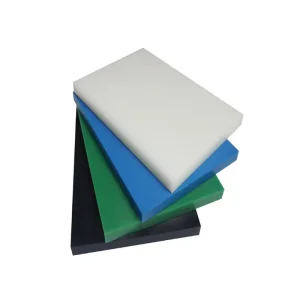
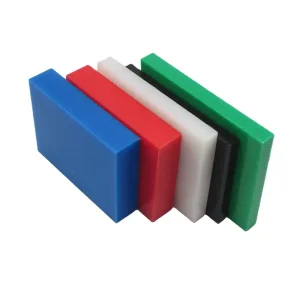
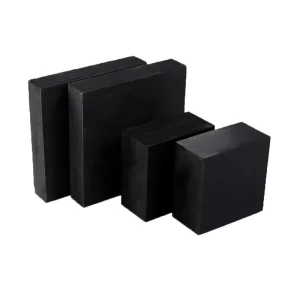
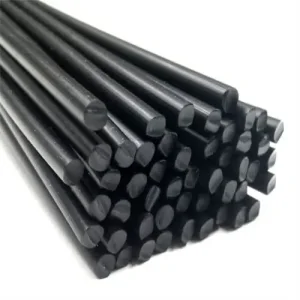
Strict adherence to ISO9001, SGS, and BV international certification guidelines. Every production run undergoes complete traceability and mechanical verification.
Advanced extrusion processing limits ovality and diameter variance in HDPE welding rods, assuring seamless performance with professional extrusion welders.
Our facility integrates heavy gantry CNC milling, lathe systems, and custom engraving, ensuring customized weld preparation profiles match structural CAD blueprints.
In the domain of modern fluid management, structural thermoplastic containment, and environmental barrier engineering, High-Density Polyethylene (HDPE) stands as the premier material selection. Known for its exceptional strength-to-density ratio, chemical resistance, and electrochemical inertness, HDPE is widely used across municipal water lines, chemical storage reservoirs, and protective linings.
However, the performance of an HDPE installation depends heavily on the integrity of its joints. Using premium HDPE welding rods is crucial to achieving uniform weld strength and ensuring long-term structural integrity.
From a material science perspective, welding HDPE involves thermal fusion. The base material and the welding rod are heated above their crystalline melting point (typically between 190°C and 240°C). This allows the polymer chains to interface and entangle. When cooled, the joint achieves molecular homogeneity, forming a strong, continuous seal.
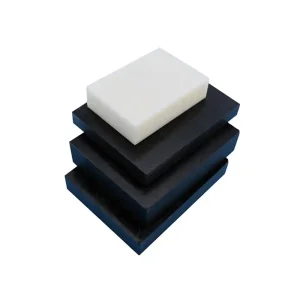
As a specialized HDPE welding rod manufacturer, Tianjin Beyond Technology Development Co., Ltd. produces welding rods formulated with high-quality resins. This ensures they match the melt flow rate (MFR) and thermal expansion metrics of industrial-grade HDPE sheets (such as PE1000/UHMWPE, PE500/HWMPE, and PE300/HDPE).
The global demand for high-quality HDPE welding consumables is growing rapidly, driven by the expansion of chemical processing plants, municipal water infrastructure upgrades, and environmental protection projects.
Industrial welding requires specialized profiles. While standard round rods (typically 3mm, 4mm, or 5mm in diameter) are used for simple hot gas welding, heavy-duty applications like geomembrane seams, chemical tank fabrications, and structural pipes require specialized triangular or oval profiles. These custom shapes ensure complete root penetration and bead symmetry.
| Industrial Application | Primary Weld Method | Recommended HDPE Rod Profile | Critical Parameter Profile |
|---|---|---|---|
| Landfill Liners & Containment | High-output Extrusion Welding | 4mm / 5mm Round Rod | High Environmental Stress Crack Resistance (ESCR) |
| Chemical Process Vessels | Hot Gas Draw Welding / Extrusion | Triangular Profile (5x3mm / 7x5mm) | Zero VOC emission, extreme chemical resistance |
| Mining Chute / Hopper Liners | Structural Stud / Extrusion Jointing | Round Rod (PE500 / PE1000 compatibility) | High abrasion resilience, impact attenuation |
| Marine Buoy & Float Fabrication | Thermal Fusion Extrusion | Circular (3mm / 4mm) | UV stabilization, low water absorption |
In addition, infrastructure development in regions like North America, Europe, and Asia-Pacific is increasing the demand for reliable HDPE welding systems. Strict environmental laws like Germany’s WHG (Water Resources Act) and the US EPA’s containment regulations require zero-leakage chemical storage systems. This has made high-quality HDPE extrusion welding the industry standard.
Sourcing HDPE welding rods and sheets from China offers significant advantages in cost efficiency, supply chain stability, and customization. Tianjin Beyond Technology Development Co., Ltd. operates a 50,000 square meter facility that integrates raw material selection, custom extrusion, and precision CNC finishing under one roof.
While smaller factories struggle with diameter variations that can clog extrusion welders (like Munsch or Leister systems), Tianjin Beyond uses laser-calibrated diameter monitoring during extrusion. This ensures a diameter tolerance of less than ±0.1mm, providing a smooth feed for consistent weld beads.
By sourcing raw materials directly from leading suppliers like TICONA, LG, and Sinopec, we maintain high purity standards. This helps prevent carbonization and bubble formation in the weld zone, which can compromise joint integrity.
Our commitment to high standards is backed by strict quality control systems. We source raw materials through established relationships with global petrochemical companies to ensure consistent material density and molecular weight.
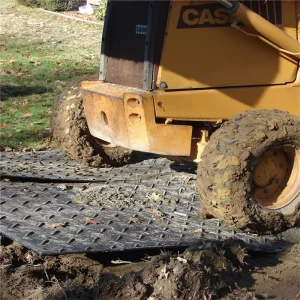
Tianjin Beyond operates an independent testing laboratory. Here, materials undergo mechanical testing for tensile strength, elongation at break, Shore hardness, and Density Verification. This rigorous testing ensures that our products, from HDPE road mats to customized UHMWPE sheets, consistently perform in demanding industrial applications.
Our focus on technical excellence has made Tianjin Beyond a trusted engineering plastics partner for companies worldwide, including in North America, Europe, Australia, and Southeast Asia.
Environmental protection codes require landfills to use double-walled HDPE lining systems. In these projects, civil engineering crews use extrusion welders to join overlapping sheets. Using our high-density PE welding rods ensures the seams can withstand chemical exposure and ground shifting over decades.
Chemical manufacturing plants use custom-fabricated HDPE vessels to handle corrosive acids. Technicians use our triangular welding rods to create multi-pass fillet welds. This ensures leak-free joins that maintain structural integrity under thermal cycles.
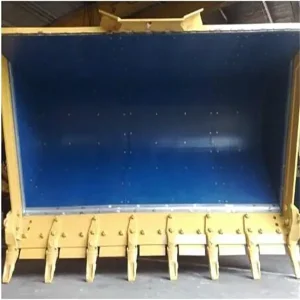
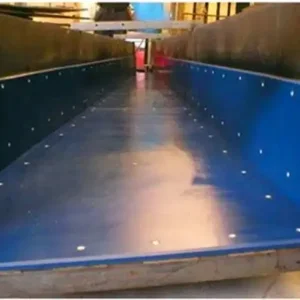
Mining operations handle abrasive slurries that wear down metal surfaces. Installing UHMWPE sheets with HDPE weld seams creates a smooth, continuous surface. This prevents material build-up and protects the underlying structures from wear.
The plastic welding industry is moving toward automated, high-precision processes. Heavy machinery and automated gantry systems are replacing manual welding to improve consistency and cycle times.
There is also a growing focus on sustainability. Industries are increasingly using recycled-content materials, such as our RG1000 series, to reduce carbon footprint. These eco-friendly materials are designed to maintain high performance in non-critical structural and lining applications.
A: The choice depends on the material thickness and your welding equipment. For manual hot gas welding on thin sheets (2-5mm), a 3mm or 4mm round rod is ideal. For thick plates and structural joints, a triangular rod (5x3mm or 7x5mm) or a 5mm round rod used with an extrusion gun ensures faster fill times and stronger welds.
A: High-quality raw materials ensure consistent molecular weight distribution. Low-grade resins can lead to diameter variations and impurities, which cause weak points, void formation, and cracking under stress. Using premium resins ensures stable thermal fusion.
A: HDPE welds best between 200°C and 260°C, depending on the welding method (hot air vs. extrusion) and ambient conditions. The plastic should reach a molten state without scorching or changing color.
A: No, thermofusion welding requires chemical compatibility. HDPE welding rods can only join HDPE materials. Joining incompatible plastics like PP or PVC will result in weak, non-functional bonds.
Explore our technical range, featuring wear-resistant UHMWPE plates, high-performance PEEK components, and custom structural polymers.
 Beyond