Premium precision extruded sheets, rods, and customized components engineered to meet the highest industrial durability standards.
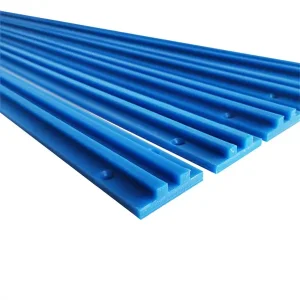
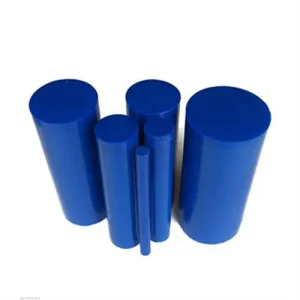
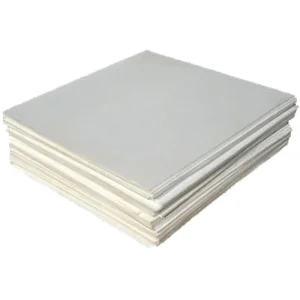
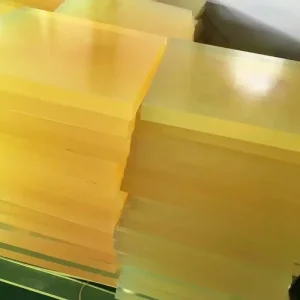
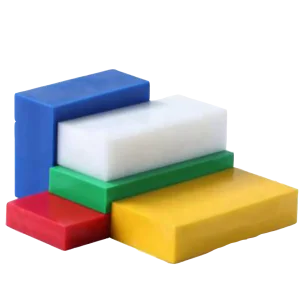
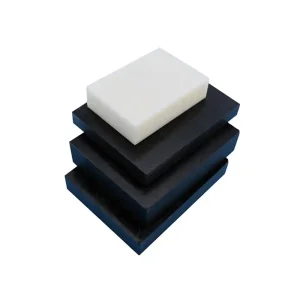
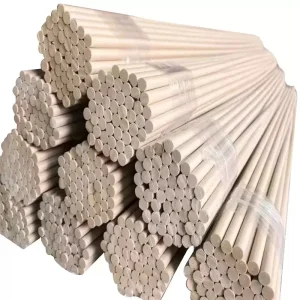
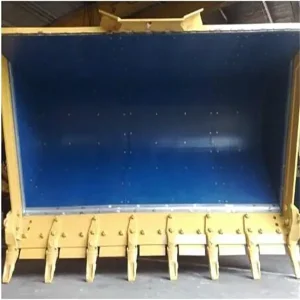
Tianjin Beyond Technology Development Co., Ltd. is an industry-recognized comprehensive manufacturing enterprise specializing in engineering plastic materials and precision CNC machining.
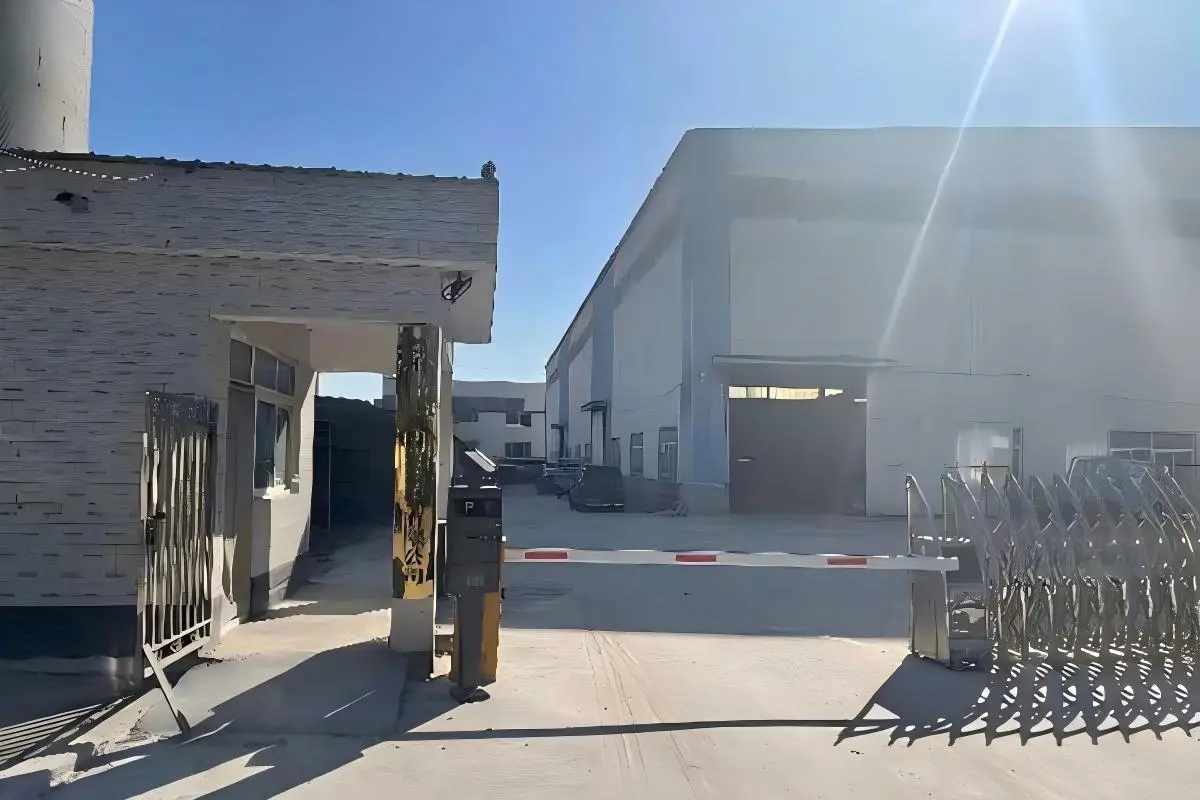
Since 2015, Tianjin Beyond Technology Development Co., Ltd. has accumulated more than ten years of practical experience in engineering plastics manufacturing and high-tolerance CNC machining. This extensive background has allowed the company to cultivate robust and reliable capabilities in material formulation, precision dimensional control, and global industrial supply.
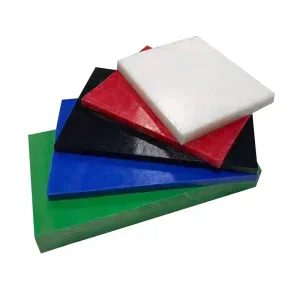
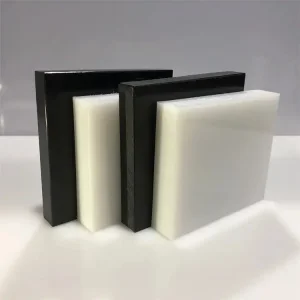
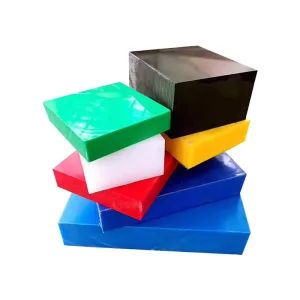
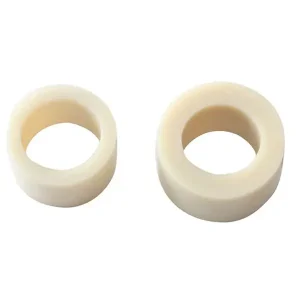
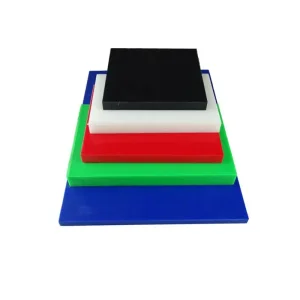
We specialize in the extrusion, compression molding, and processing of premium polymer products, including **PA6 (Nylon 6) Sheets and Rods**, **UHMWPE (PE1000)**, **HDPE (PE300)**, **PP**, and **PVC**, as well as customized non-standard engineering components. Our manufacturing facility spans approximately 50,000 square meters, integrating state-of-the-art compression molding workshops, automatic extrusion lines, and a high-precision CNC machining center.
To ensure unparalleled consistency, we partner with premier global chemical suppliers including TICONA, LG, and Sinopec. This solid foundation of high-grade raw materials ensures that all engineering components leaving our factory floor comply with international standards.
Polyamide 6 (commonly referred to as Nylon 6 or PA6) is one of the most versatile engineering thermoplastic polymers in the world. Synthesized via the ring-opening polymerization of caprolactam, its molecular structure contains repeating amide groups that facilitate strong intermolecular hydrogen bonding. This unique chemistry gives PA6 an exceptional balance of mechanical strength, high thermal stability, and structural rigidity.
In global industrial applications, understanding the precise mechanical, thermal, and electrical properties of PA6 is critical. Below is a comprehensive engineering breakdown of the key material properties of virgin and modified PA6:
| Property Parameter | Testing Method | Virgin PA6 (Unmodified) | PA6 + 30% Glass Fiber (PA6-GF30) |
|---|---|---|---|
| Density (g/cm³) | ISO 1183 | 1.13 - 1.15 | 1.35 - 1.38 |
| Tensile Strength at Yield (MPa) | ISO 527 | 75 - 85 | 160 - 185 |
| Flexural Modulus (MPa) | ISO 178 | 2,800 - 3,200 | 7,500 - 8,500 |
| Charpy Notched Impact Strength (kJ/m²) | ISO 179 | 6 - 8 | 10 - 12 |
| Melting Point (°C) | ISO 3146 | 220 | 220 |
| Heat Deflection Temp (HDT - 1.8 MPa) (°C) | ISO 75 | 70 - 75 | 190 - 215 |
| Water Absorption (Saturation in water) (%) | ISO 62 | 8.5 - 9.5 | 5.5 - 6.5 |
| Coefficient of Sliding Friction (Dry) | DIN 53375 | 0.35 - 0.42 | 0.40 - 0.48 |
A key consideration for design engineers using PA6 is its hygroscopic nature. PA6 absorbs moisture from its environment, which acts as a plasticizer. This increases impact strength and elongation at break while slightly decreasing tensile strength and stiffness. At Tianjin Beyond, we utilize advanced post-extrusion conditioning processes to stabilize the moisture content of our PA6 rods and sheets, ensuring predictable dimensional tolerances during precision CNC machining.
Tianjin Beyond combines strategic location, advanced production technologies, and raw material integration to deliver cost-effective, high-grade polymer solutions.
We run both compression molding, continuous extrusion lines, and heavy-duty gantry CNC machining centers in the same facility, eliminating third-party transit and reducing production lead times.
Our raw materials are directly procured from industry leaders like TICONA, LG, and Sinopec, guaranteeing consistent physical characteristics and batch-to-batch polymer integrity.
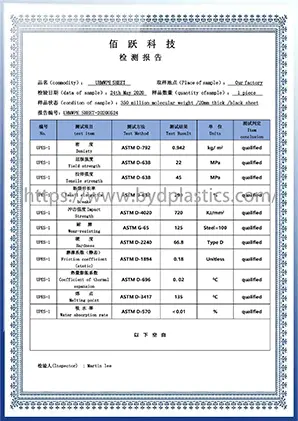
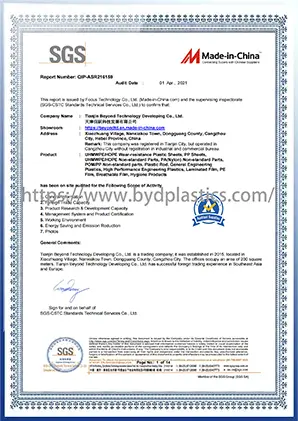
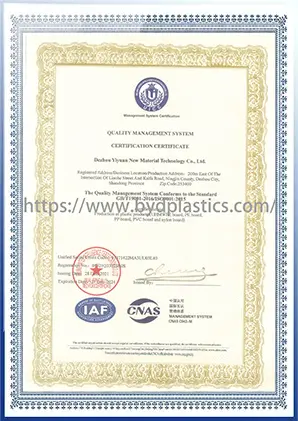
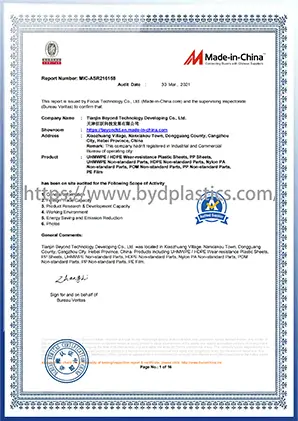
Operating under ISO9001, SGS, and BV frameworks, our in-house laboratory subjects each batch of PA6 sheets and rods to strict mechanical, dimensional, and chemical testing.
Premium engineering components start with premium raw materials and a structured quality inspection workflow.
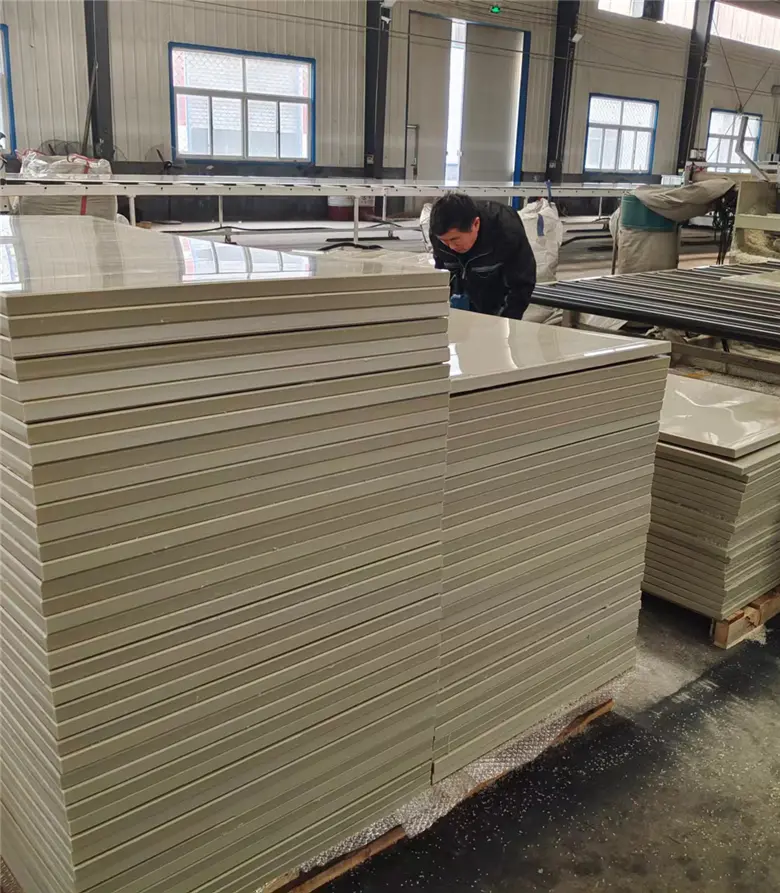
Ensuring consistent mechanical properties and zero internal voids in extruded PA6 rods and sheets using ultrasonic scanners.
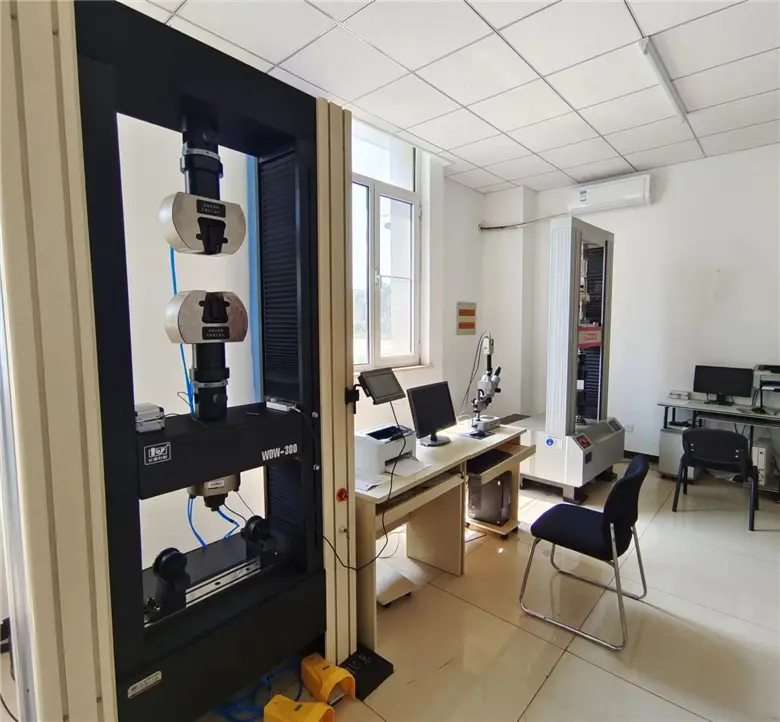
Gantry CNC milling machines processing industrial components to custom dimensional tolerances up to ±0.05 mm.
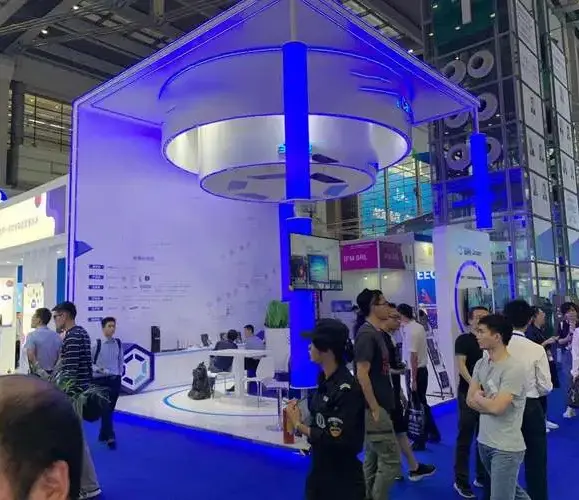
Advanced extrusion facilities designed to optimize the crystal structure and internal stresses of PA6 polymers.
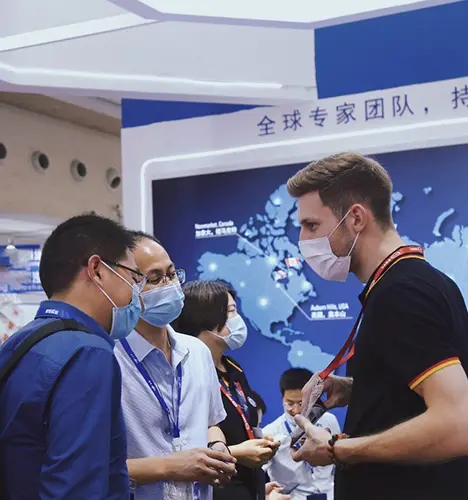
Every shipment is verified for flatness, thickness tolerance, and mechanical compliance before dispatch.
Tianjin Beyond operates with strict conformity to international manufacturing norms. Our system is fully certified under ISO9001, SGS, and BV, assuring global procurement officers of our operational standard.
Polyamide 6 (PA6) properties make it a premier choice across many high-stress industries. Through customization and precision CNC fabrication, Tianjin Beyond supports various international sectors:
In modern automotive designs, PA6 replaces metallic structures to reduce vehicle weight and improve fuel efficiency. Key components include chain guides, engine covers, intake manifolds, oil pans, and cooling fans. The high thermal resistance of glass-fiber-reinforced PA6 ensures structural integrity under severe under-the-hood conditions.
In gears, sprockets, and heavy-duty sliding bearings, PA6 provides a self-lubricating surface that prevents metal-on-metal galling. This lowers the requirement for external lubricants and extends the operational life of planetary gearboxes, conveyor systems, and overhead crane track wheels.
Nylon guides, wear strips, and pulleys are critical in high-speed sorting and distribution centers. PA6's high impact absorption reduces operational noise, while its low friction co-efficient saves energy by decreasing conveyor drag.
From custom crane outrigger pads to dock fender support blocks, modified polyamides are formulated to withstand extreme weather conditions, UV degradation, and load stresses without fracturing.
The industrial plastics sector is evolving rapidly under global pressure for sustainability and smarter manufacturing. Tianjin Beyond is at the forefront of these technological advancements, focusing on the following core areas:
Environmental standards require manufacturers to lower their carbon footprints. We are actively developing and testing recycled PA6 grades and bio-sourced precursors to offer ecological alternatives without sacrificing mechanical properties like tensile strength and flexural modulus.
By blending PA6 with carbon nanotubes, graphite, or molybdenum disulfide (MoS2), we create ultra-low wear polymers with anti-static capabilities. This is vital in electronic manufacturing facilities and explosive explosive atmosphere (ATEX) zones where sparks must be prevented.
By leveraging automated CAD/CAM workflows, our production line offers extremely fast turnarounds on custom designs, from rapid prototyping to high-volume manufacturing of complex geometric profiles.
International procurement departments face challenges regarding chemical compliance, lead times, and quality consistency. Sourcing directly from Tianjin Beyond ensures compliance with modern global supply protocols:
Find engineering answers to common technical and commercial inquiries about PA6 material properties and custom OEM processing.
PA6 is made from a single monomer (caprolactam) through ring-opening polymerization, while PA66 is made from two monomers (hexamethylenediamine and adipic acid). Chemically, PA66 has a higher melting point (260°C vs 220°C for PA6) and lower water absorption rate. However, PA6 offers superior impact resistance, better surface finish, and is easier to process via extrusion and injection molding, making it highly cost-effective for general industrial components.
PA6 absorbs moisture up to 9% under saturated conditions, which can lead to slight dimensional swelling (around 2-3% in volume). During the engineering phase, designers must account for this by incorporating appropriate tolerances in high-precision fits. Alternatively, we suggest glass-fiber modifications or opting for polymers with lower moisture absorption, like UHMWPE or POM, depending on the application environment.
We offer several custom modifications, including: Glass Fiber Reinforcement (10% to 50% GF for high stiffness and load capacity), Carbon Fiber Reinforcement (for high strength and thermal conductivity), MoS2-Filled Nylon (for enhanced self-lubrication and wear resistance), and Flame Retardant Grades (UL94 V-0 ratings for electrical components).
Yes, unmodified PA6 can be formulated to meet FDA and EU food contact regulations. However, for continuous direct contact with moist food elements, we often recommend UHMWPE or POM, as they do not absorb moisture or harbor bacterial growth as easily.
For standard sheets and rods, we maintain a large inventory ready for prompt dispatch. For custom CNC components, typical production cycles take 7 to 15 days from sample verification, depending on structural complexity and total volume.
Every batch of PA6 or engineering plastic is supplied with a Certificate of Analysis (COA). We perform physical checks, including ultrasonic flaw detection, to verify zero porosity inside thick plates and rods, preventing failures during machining or assembly.
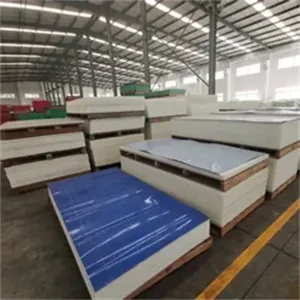
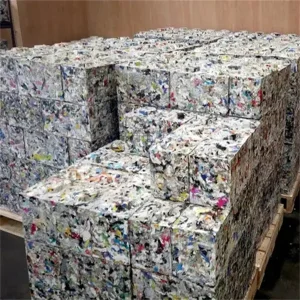
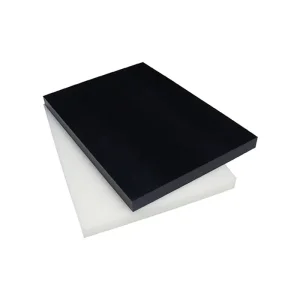
From low-friction UHMWPE to highly rigid PP and PVC sheets, we offer engineered solutions for every structural challenge.
 Beyond