 Beyond
1 / 3
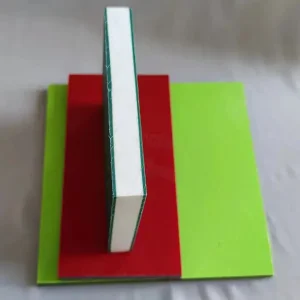
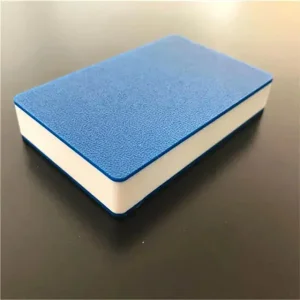
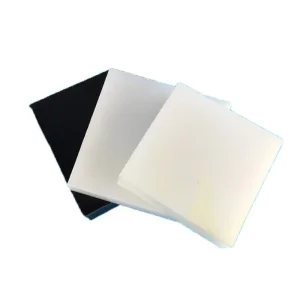
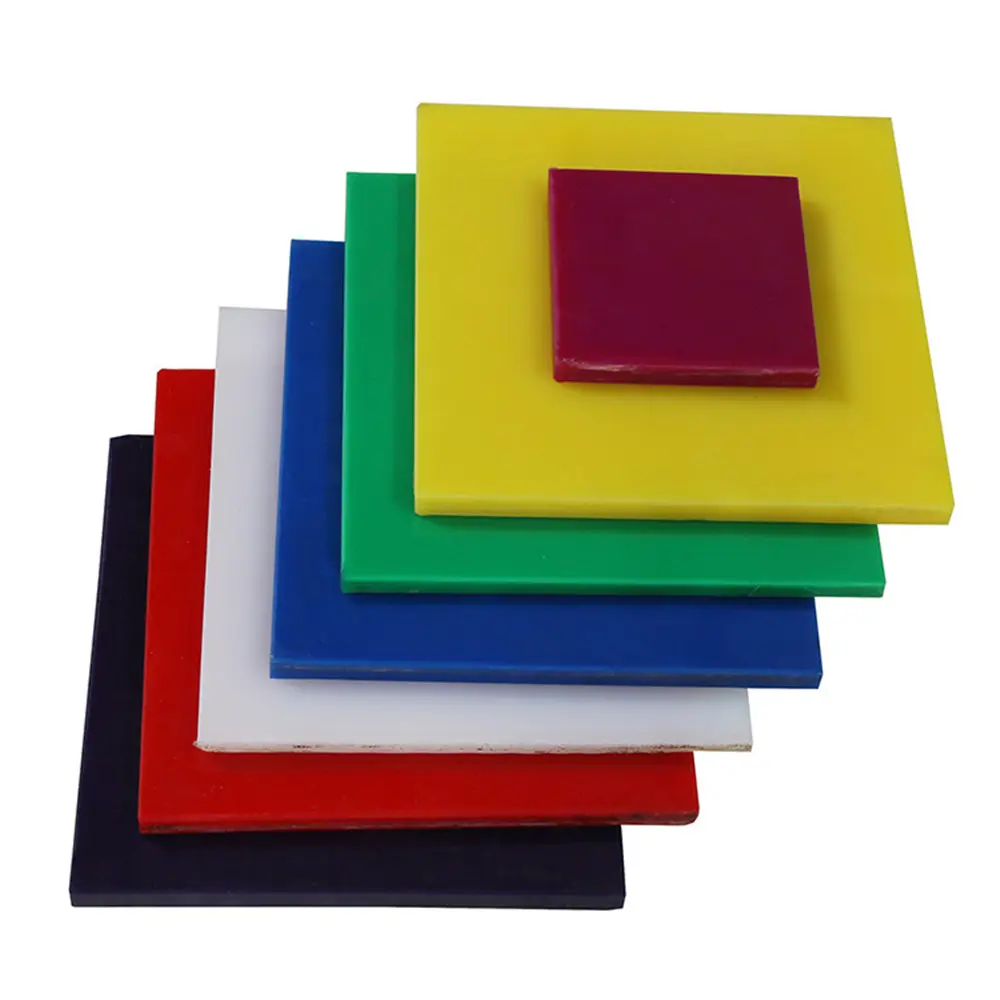
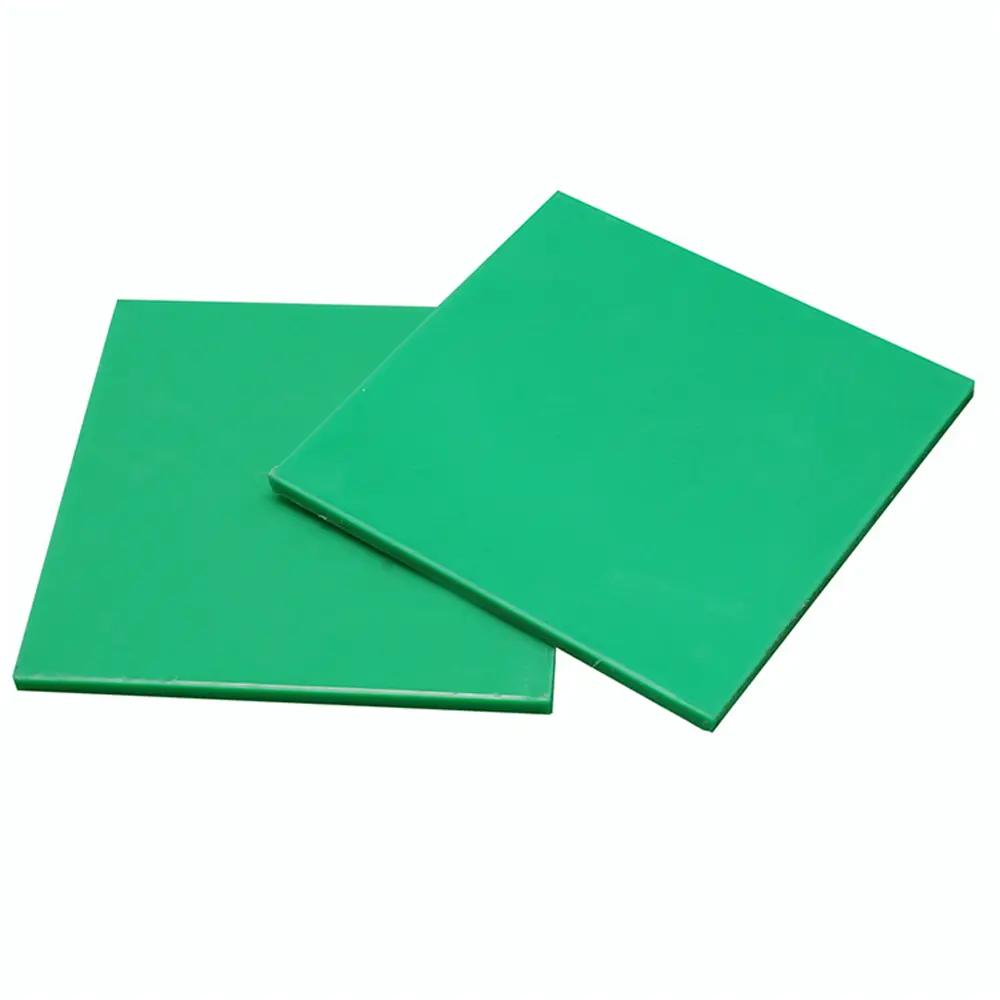
Polyethylene PE300 sheet - HDPE is a lightweight and strong engineering plastic with high impact strength. It also has excellent chemical resistance with very low moisture absorption and is FDA approved. HDPE can also be fabricated and welded. Polyethylene PE300 sheet.
Designed to be one of the most versatile plastics in the world, high density polyethylene offers a wide variety of benefits. The HDPE is engineered to be long-lasting, low maintenance, and safe. The material is FDA approved for use in the food processing industry, and it provides the added benefit of being moisture, stain, and odor resistant.
In addition to the many benefits listed above, HDPE is corrosion resistant, meaning it does not splinter, rot, or retain harmful bacteria. This key feature, along with its weather resistance, makes HDPE perfect for use in areas that encounter water, chemicals, solvents, and other fluids.
HDPE is also known to possess a large strength to density ratio (ranging from 0.96 to 0.98 g), yet it is easily meltable and moldable. It can be easily cut, machined, fabricated, and welded and/or mechanically fastened to meet the desired specification of countless applications.
Lastly, like many engineered plastics, HDPE is easily recyclable and can help significantly reduce plastic waste and production.
| Item | RESULT | UNIT | PARAMETER | NORM USED |
|---|---|---|---|---|
| Mechanical properties | ||||
| Modulus of elasticity | 1000 | MPa | In tension | DIN EN ISO 527-2 |
| Modulus of elasticity | 1000 - 1400 | MPa | In flexure | DIN EN ISO 527-2 |
| Tensile strength at yield | 25 | MPa | 50 mm/min | DIN EN ISO 527-2 |
| Impact strength (Charpy) | 140 | Kj/m 2 | Max. 7,5j | - |
| Notched Impact stren. (Charpy) | No break | Kj/m 2 | Max. 7,5j | - |
| Ball indentation hardness | 50 | MPa | - | ISO 2039-1 |
| Creep rupture strength | 12,50 | MPa | After 1000 hours static load 1% elong. after 1000 hours Against steel p=0,05 N/mm 2 | |
| Time yield limit | 3 | MPa | ||
| Coefficient of friction | 0,29 | ------ | ||
| Thermal properties | ||||
| Glass transition temperature | -95 | °C | - | DIN 53765 |
| Crystalline melting point | 130 | °C | - | DIN 53765 |
| Service temperature | 90 | °C | Short term | - |
| Service temperature | 80 | °C | Long term | - |
| Thermal expansion | 13 - 15 | 10-5K-1 | - | DIN 53483 |
| Specific heat | 1,70 - 2,00 | J/(g+K) | - | ISO 22007-4:2008 |
| Thermal conductivity | 0,35 - 0,43 | W/(K+m) | - | ISO 22007-4:2008 |
| Heat distorsion temperature | 42 - 49 | °C | Method A | R75 |
| Heat distorsion temperature | 70 - 85 | °C | Method B | R75 |
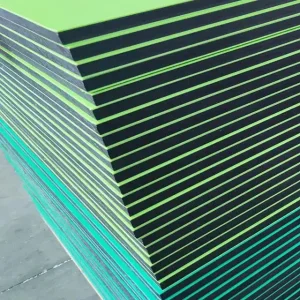
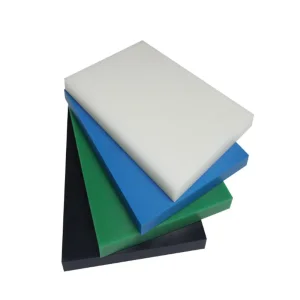
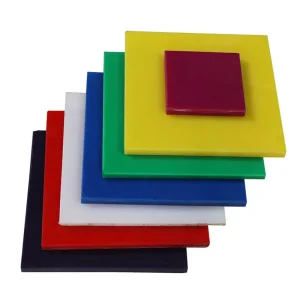
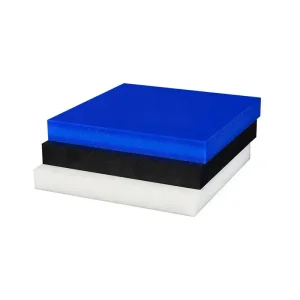
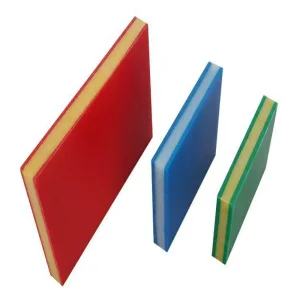
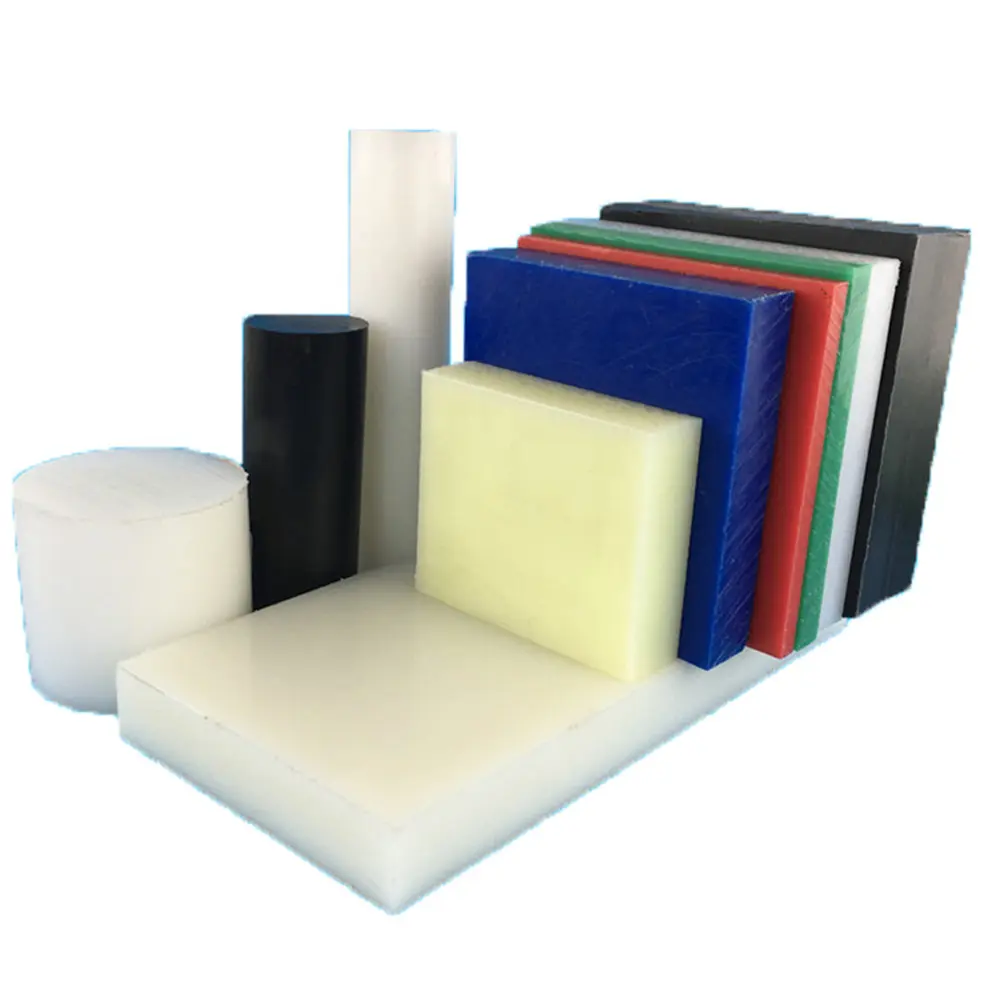
HDPE is available in numerous sizes, shapes, thicknesses, and colors. CNC cutting services are also available to help you maximize your yield and cut your overall costs.
Thanks to the versatility of high-density polyethylene, many manufactures often replace their old heavier materials with HDPE. This product is used across countless industries including food processing, automotive, marine, recreation, and more!
HDPE’s properties make it a great choice for indoor and outdoor applications, including:
Among other things, HDPE is also used in bottles, kick plates, fuel tanks, lockers, playground equipment, packaging, water tanks, food processing equipment, chute linings, and boat, RV, and emergency vehicle interiors.
Various UHMWPE / HDPE / PP / PA / POM sheets can be provided according to different requirements in different applications.