Direct supply from state-of-the-art manufacturing lines ensuring robust mechanical integrity and ISO-certified quality.
A Comprehensive Guide on Material Physics, Industrial Applications, and Global Supply Dynamics.
Nylon 66 (Polyamide 66, or PA66) stands as one of the most widely utilized engineering thermoplastics globally. Its molecular layout, characterized by alternating hexamethylenediamine and adipic acid linkages, results in a highly symmetrical and crystalline matrix. The standard density of unmodified extruded Nylon 66 typically sits at 1.14 g/cm³. However, manipulating this density through filler modifications is a vital tool for polymer engineers.
By incorporating materials like glass fibers, carbon fibers, or minerals, the density can be tailored upwards to range between 1.32 g/cm³ and 1.45 g/cm³. This alteration drastically shifts the mechanical profile. Increased density through crystalline alignment or reinforcing fibers directly correlates with enhanced tensile strength, greater flexural modulus, and reduced thermal expansion rates. This density control allows Nylon 66 to reliably replace cast iron and die-cast aluminum in structural engineering projects.
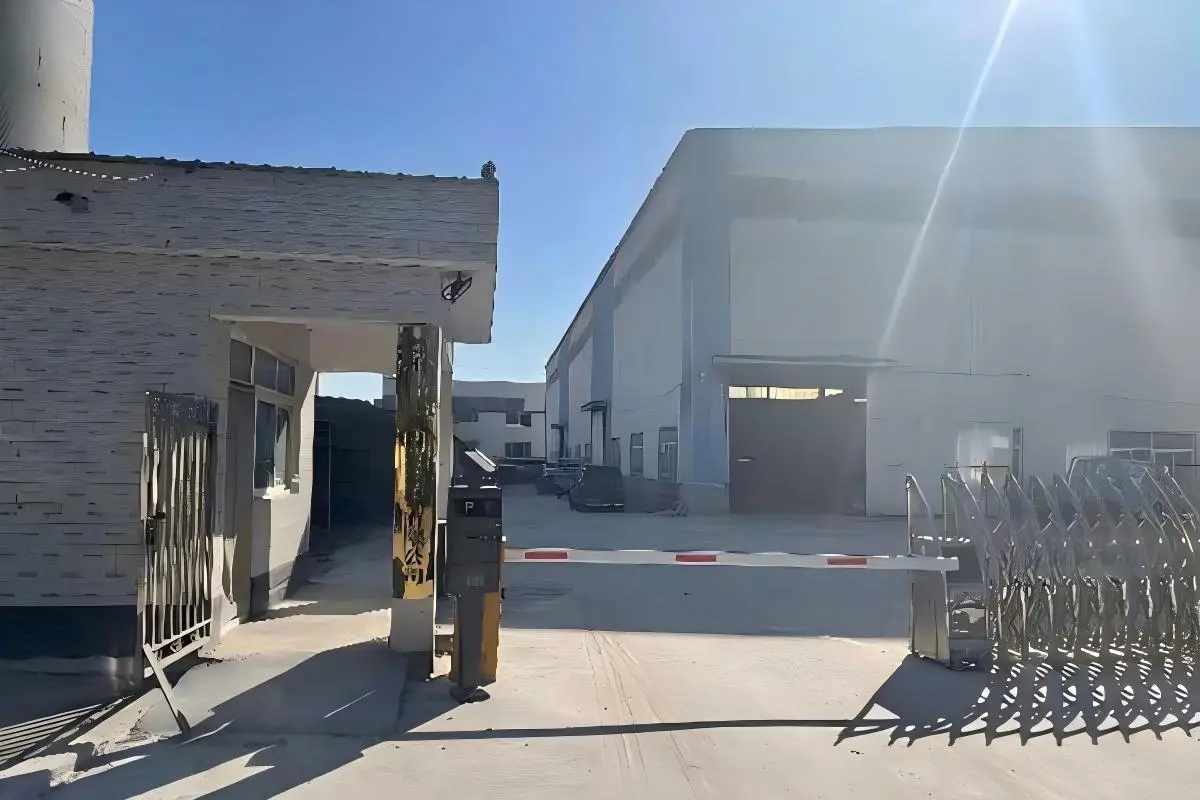
The global market for Nylon 66 is undergoing rapid expansion, driven primarily by light-weighting initiatives in the automotive sector and insulation requirements in electronics. China has solidified its position as a global manufacturing powerhouse, hosting major raw material processing and synthesis complexes. Our state-of-the-art facility in Tianjin, spanning 50,000 square meters, addresses the growing demand for large-volume industrial extrusions.
Currently, international distribution networks face challenges due to precursor raw material availability (such as adiponitrile). Despite these dynamics, factories that maintain direct partnerships with leading polymer producers like Ticona, LG, and Sinopec enjoy robust supply chains. This ensures consistent molecular weights and reliable delivery for heavy industry applications worldwide.
| Property Description | Unmodified Nylon 66 (PA66) | 30% Glass Fiber Reinforced Nylon 66 | MC Cast Nylon (PA6) |
|---|---|---|---|
| Density (g/cm³) | 1.14 - 1.15 | 1.35 - 1.41 | 1.15 - 1.16 |
| Tensile Strength (MPa) | 85 | 175 | 80 |
| Flexural Modulus (GPa) | 2.8 | 8.5 | 3.2 |
| Max Service Temp (Short term, °C) | 170 | 240 | 160 |
| Moisture Absorption (Equilibrium, %) | 2.5% - 3.0% | 1.5% - 2.0% | 2.2% - 2.8% |
How modern engineering practices are upgrading Nylon 66 performance profiles for tomorrow's challenges.
By blending specialized heat stabilizers into high-density PA66 matrices, continuous operating limits can be pushed past 180°C. This advancement is crucial for under-hood automotive housings and continuous-run industrial machinery.
Nylon's amide groups naturally attract water, which acts as a plasticizer and alters part dimensions. Modern compounders utilize hydrophobic additives and precise density tuning to lower equilibrium water absorption down to 1.5%.
Integrating carbon fibers produces a light-weight composite with high structural rigidity. These formulations are ideal for high-precision CNC components in aerospace systems, defense robotics, and medical devices.
A leading manufacturing enterprise specializing in engineering plastic materials and precision CNC machining.
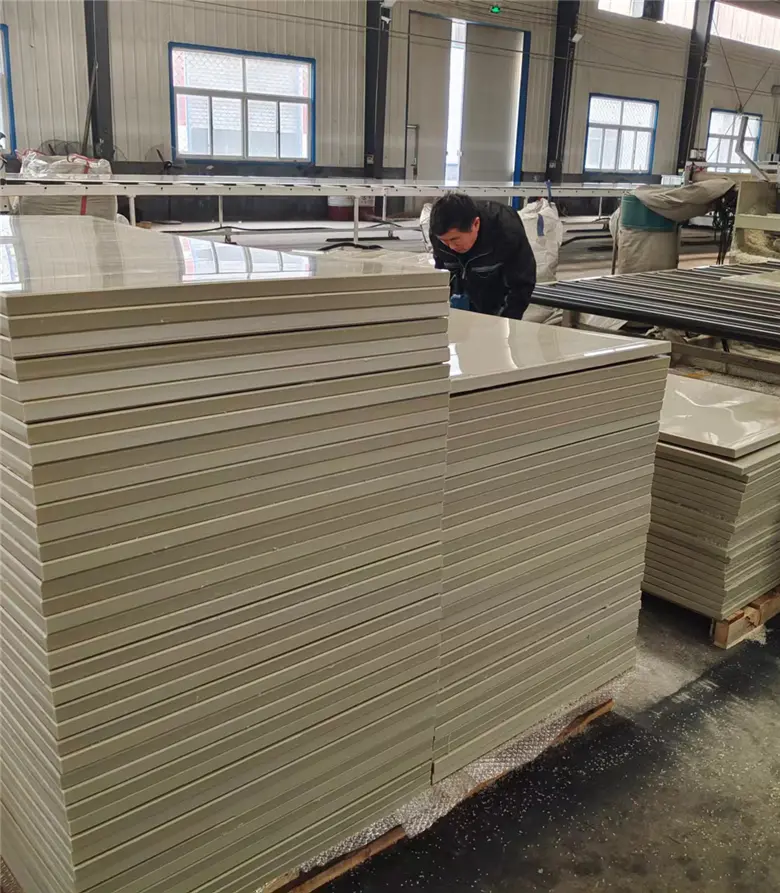
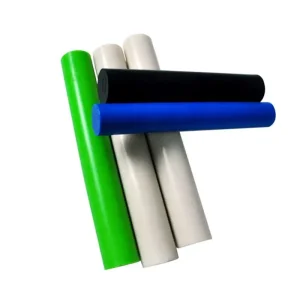
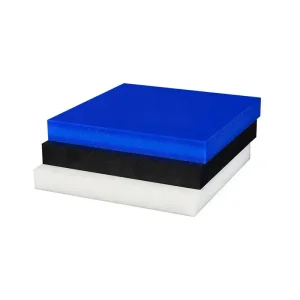
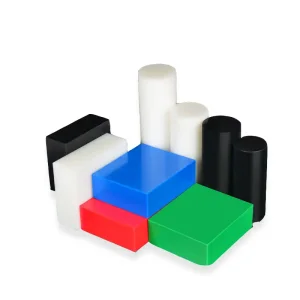
Established as a comprehensive manufacturer, Tianjin Beyond Technology Development Co., Ltd. operates out of a modernized 50,000 square meter facility. We specialize in producing and processing high-density Nylon 66, UHMWPE, HDPE, PP, and PVC sheets, rods, and complex CNC-machined parts.
Our infrastructure includes large-scale extrusion lines, heavy compression molding equipment, and multi-axis CNC centers. We handle the entire production cycle, from raw material selection to complex, tight-tolerance machining. This allows us to supply materials designed for challenging operating environments.
Providing specialized engineering configurations for complex global operating environments.
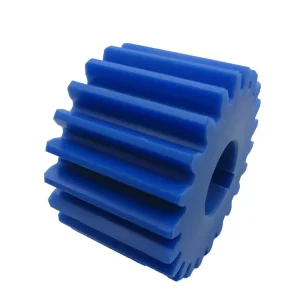
In heavy industrial equipment, metal-on-metal contact causes rapid wear and requires continuous lubrication. Replacing brass and steel gears with high-density Nylon 66 provides a self-lubricating, vibration-damping solution. Nylon 66's crystalline matrix absorbs impact energy and dampens noise, extending component lifetimes in dusty environments like mining and construction.
Unlike steel, which rusts and corrodes, Nylon 66 offers excellent resistance to hydrocarbons, organic solvents, and mild chemical solutions. In chemical processing plants, high-density Nylon 66 components function reliably without structural degradation, preventing contamination in closed-loop systems.
Under-hood environments experience rapid thermal cycling and constant exposure to automotive fluids. High-density Glass-reinforced Nylon 66 is widely used for intake manifolds, radiator end tanks, and engine covers. The material maintains its structural integrity and resists creep under continuous stress at elevated temperatures, supporting vehicle weight-reduction efforts.
Marine components must withstand salt spray, UV exposure, and constant mechanical friction. High-density Nylon 66 sheets and machined wear strips are frequently used as protective liners on ship decks and harbor installations. They resist saltwater corrosion and require minimal maintenance, making them a durable alternative to treated wood or metal sheets.
Our production facilities maintain strict adherence to international quality management systems.
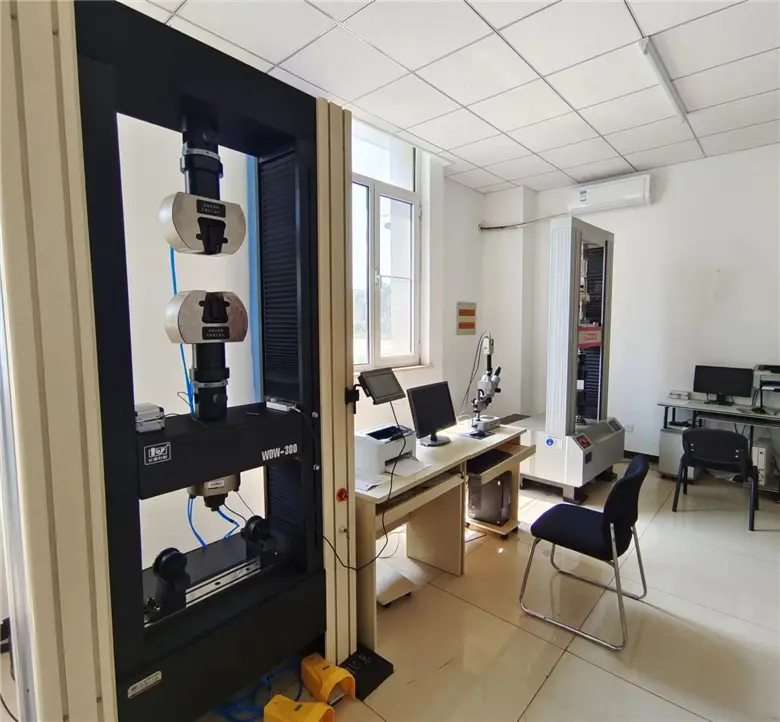
We manage our operations in strict compliance with the ISO 9001:2015 standard. Each batch of raw polymer undergoes thorough testing to verify density, molecular weight distribution, and tensile properties before processing begins.
By sourcing raw materials from certified global suppliers like TICONA, LG, and Sinopec, we ensure consistent batch-to-batch quality. Our laboratory performs ultrasonic non-destructive testing on thick extruded sheets and rods to detect internal voids, ensuring high reliability for subsequent CNC machining.

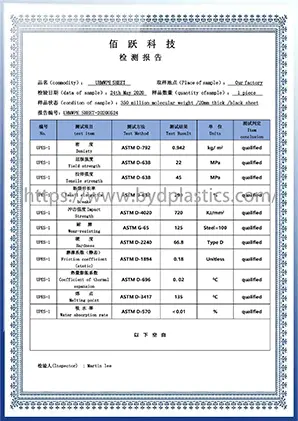
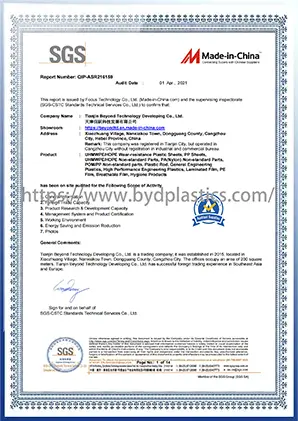
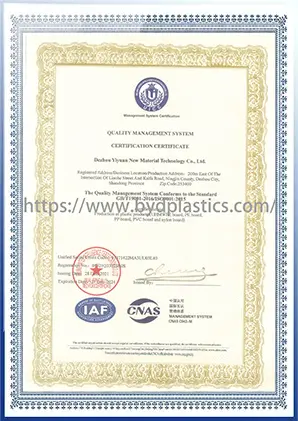
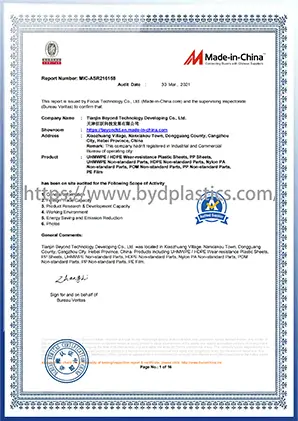
Combining structural performance, direct factory pricing, and advanced CNC customization.
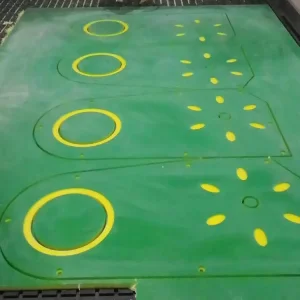
We provide full CNC machining services based on customer drawings, producing complex shapes with tolerances down to ±0.02 mm.
We perform material validation checks, process control inspections, and provide COA (Certificate of Analysis) documentation for every shipment.
We maintain a large stock of standard engineering plastic sheets and rods, enabling prompt production runs and short delivery times.
Addressing common technical queries about Nylon 66 density, processing, and application engineering.
We manufacture a wide selection of high-performance polymer sheets, rods, and custom components.
 Beyond